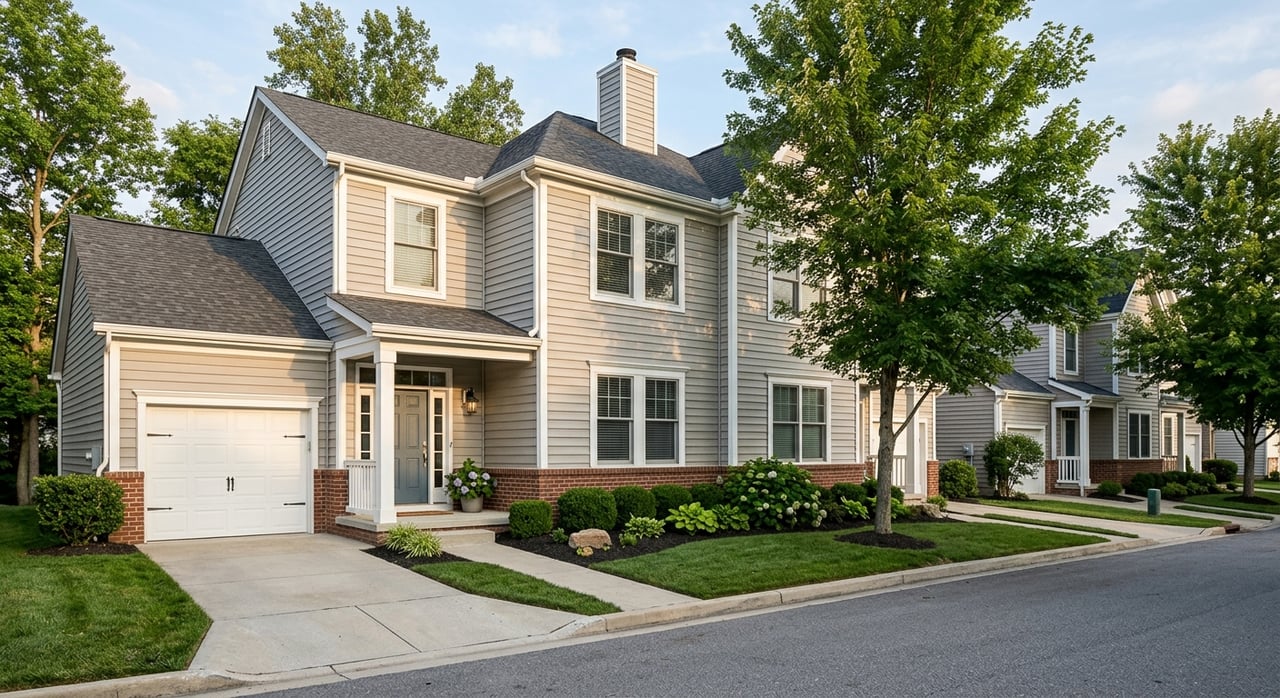
Apple Valley Townhome vs. House: How to Choose
July 2, 2026
July 2, 2026
Buying in Apple Valley often comes down to one big question: do you want more space and control, or less maintenance and more convenience? If you are deciding between a townhome and a single-family home, you are not alone. In a market with active inventory and a wide range of price points, the right choice depends on how you want to live day to day, not just what you want to spend. Let’s break down the trade-offs so you can compare both options with confidence.
Apple Valley has a housing mix that still leans strongly toward single-family homes, but townhomes are a meaningful part of the market. The city’s housing assessment reported 16,017 single-family units and 4,214 multifamily units, which helps explain why detached homes still shape much of the local inventory.
At the same time, townhomes are not always small starter properties here. The city also notes that more than 55% of single-family homes, townhomes, and twin homes have over 2,000 finished square feet. That means you may find a townhome in Apple Valley that gives you more room than you expect.
Apple Valley is also a mature housing market. Roughly half of the housing stock was built between 1960 and 1990, and homes from that era often need updates to roofs, siding, wiring, plumbing, driveways, and similar systems. That matters because the maintenance side of ownership can look very different between these two property types.
If budget is your top concern, townhomes often offer a lower entry point in Apple Valley. Recent listing snapshots showed townhomes with a median listing price around $285,000, with examples ranging from about $204,900 to $629,900.
Single-family homes usually require a larger budget. Current detached-home examples in Apple Valley range from about $279,900 to $995,000, with many listings in the mid-$300,000s through the $600,000s.
There is still some overlap. A higher-end townhome can cost more than an entry-level detached home, so you should avoid assuming that one category is always cheaper. Square footage, age, location within Apple Valley, and HOA coverage can all change the equation.
For many buyers, the biggest difference is not price. It is how much home upkeep you want to handle yourself.
With a townhome, an HOA often takes care of some exterior responsibilities. Apple Valley’s housing plan says many newer developments are HOA-managed, and HOAs in the city are typically responsible for snow removal, road repair and replacement, and common exterior features such as roofs, siding, and windows, along with shared amenities or common property.
That setup can be appealing if you want lower day-to-day maintenance. You may spend less time thinking about snow, exterior repairs, or long-term upkeep of shared spaces.
A single-family home often gives you more direct control, but it usually gives you more direct responsibility too. If the roof needs replacement, the driveway needs repair, or the siding needs work, those decisions and costs are generally yours.
A townhome may simplify maintenance, but that does not mean ownership is simpler across the board. In Minnesota common-interest communities, the governing documents define what you own individually, what is shared, and who is responsible for maintenance, repairs, and reserves.
Those same documents may also regulate things like exterior appearance, parking, pets, and noise. Before you choose a townhome, you should know exactly what the HOA covers and what rules come with it.
Apple Valley’s housing plan also warns that underfunded associations can defer maintenance or raise dues. Monthly dues should help fund future improvements, so it is smart to review budgets, reserves, and maintenance schedules before you buy.
Before touring or making an offer, compare these items carefully:
This is one of the clearest townhome trade-offs in Apple Valley. You may reduce exterior chores, but you also accept shared financial planning and shared rules.
If you picture yourself gardening, expanding a patio, fencing part of the yard, or simply enjoying more separation from neighbors, a single-family home may be the better fit. Current detached-home listings in Apple Valley often highlight fenced yards, larger lots, decks, storage sheds, and garden-friendly backyards.
That private outdoor control is often one of the biggest advantages of a detached home. It gives you more flexibility for hobbies, pets, entertaining, or future projects.
Townhomes usually offer a different lifestyle. Current Apple Valley examples often feature decks, garages, private courtyards, one-level living, and low-maintenance living rather than large private lots.
That does not make them less desirable. It simply means the value often comes from convenience, shared maintenance, and in some cases access to common amenities such as landscaped grounds, parks, or pools.
In Apple Valley, attached and higher-density housing is concentrated more heavily in the downtown and central village area near major shopping, services, and the transit station. If convenience is high on your list, some townhome communities may line up well with your goals.
Detached homes are found across a wider range of Apple Valley settings and often appeal to buyers who want more lot space or a more traditional suburban layout. Depending on the home, that can mean more room for storage, outdoor use, or long-term customization.
This does not mean one location pattern is better than the other. It simply helps explain why your daily routine may feel different in a townhome community versus a detached-home neighborhood.
Your best choice depends on what you value most. A lower list price does not always mean lower total cost, and a larger home does not always mean a better fit.
A townhome can be a practical choice if you want:
This option often appeals to first-time buyers, downsizers, or buyers who want to spend less time on outdoor work. The key is making sure the HOA is financially healthy and the rules work for your lifestyle.
A single-family home can be a better fit if you want:
This option often appeals to move-up buyers and anyone who wants long-term flexibility. In Apple Valley, detached-home inventory spans a wide range, so there may be options from more modest homes to higher-end properties depending on your budget.
When you tour homes in Apple Valley, try not to compare townhomes and single-family homes on asking price alone. That is one of the easiest ways to miss the real cost and lifestyle differences.
Instead, compare the full picture:
In a market where homes are moving and inventory is active, clarity matters. Recent data showed 154 homes for sale in Apple Valley, a median sale price of $379,948, and an average of 20 days on market, so being prepared helps you make better decisions faster.
If you are torn between a townhome and a single-family home, start by thinking about your weekly routine. Do you want more freedom outside, or do you want fewer exterior responsibilities? Do you want maximum privacy, or would shared maintenance and a more predictable exterior workload make life easier?
Then move from lifestyle to numbers. Compare the HOA dues, reserve strength, maintenance coverage, age of the home, and likely repair needs alongside the list price.
In Apple Valley, both property types can be a strong choice. The right answer is the one that fits your budget, your time, and the way you actually want to live. If you want help comparing specific Apple Valley listings, reach out to Amanda Cox for trusted, local guidance.
Stay up to date on the latest real estate trends.
We are committed to guiding you every step of the way—whether you're buying a home, selling a property, or securing a mortgage. Whatever your needs, we've got you covered.
LAURA BAERTHEL
4411 LAKE AVE S WHITE BEAR LAKE MN 55110